
Florida’s ABA Providers Face Increased Medicaid Oversight and Potential Policy Changes
 Rapid growth in Medicaid spending on Applied Behavior Analysis (ABA) services has prompted closer examination by state and federal policymakers of treatment quality, service utilization, and program integrity. According to the Centers for Medicare & Medicaid Services (CMS), national Medicaid and Children’s Health Insurance Program spending on ABA increased 421% between 2021 and 2025, compared with a 67% increase in children with an autism spectrum disorder diagnosis receiving services. In August 2026, CMS released an ABA toolkit to help states evaluate clinical standards, provider qualifications, payment policies, utilization management, and safeguards against fraud, waste, and abuse. The toolkit provides guidance without creating new federal requirements or reducing states’ obligations to cover medically necessary care for eligible children.

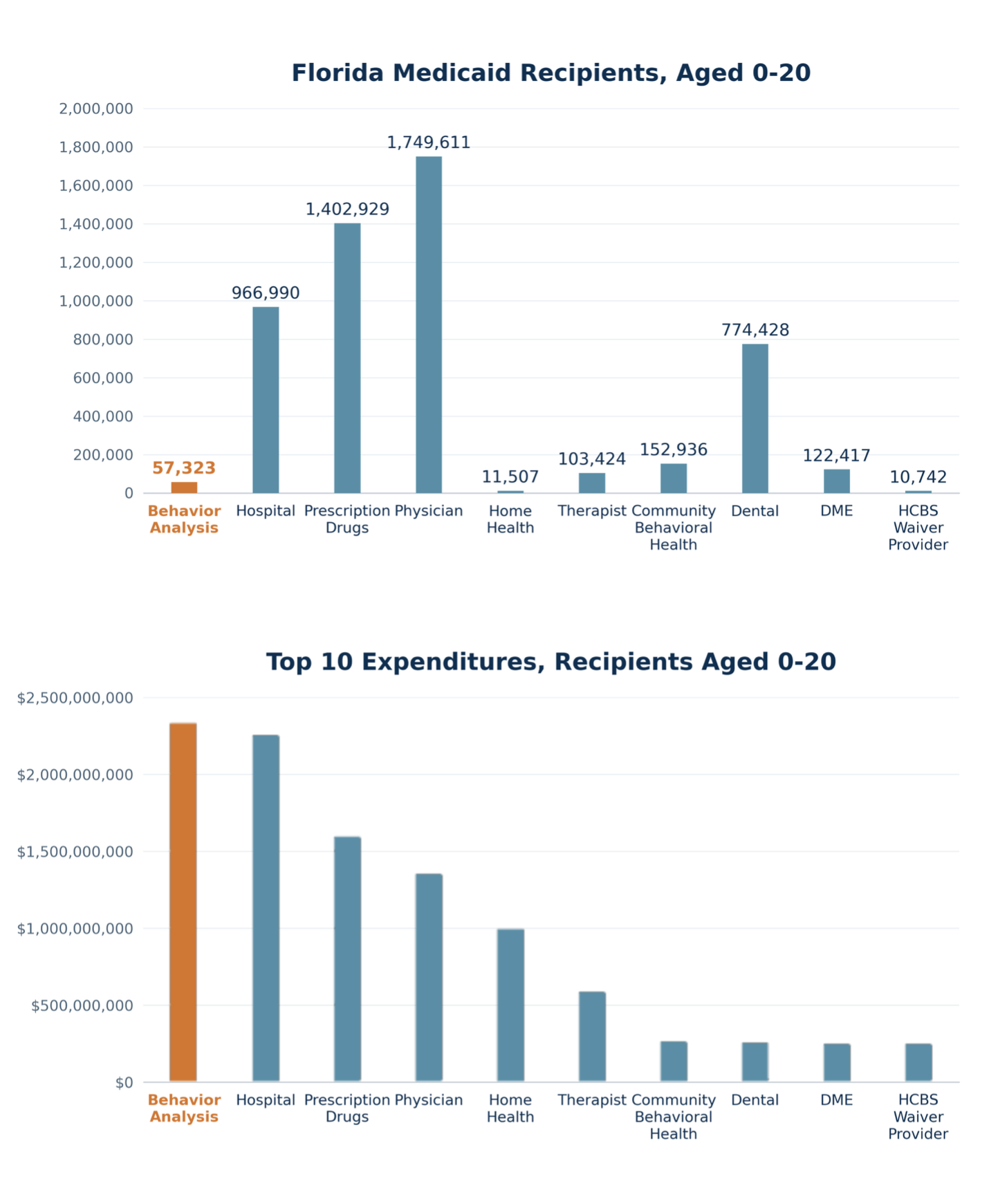
Florida’s spending illustrates why these issues have become a priority for the Governor and Legislature. In its August 12 presentation to the ABA Task Force, the Agency for Health Care Administration (AHCA) reported behavior analysis expenditures exceeding $2 billion for Medicaid recipients ages 0–20—the highest total among the service categories presented—while serving far fewer recipients than hospital, prescription drug, or physician services. While spending differences alone do not establish improper care or billing, the scale and concentration of these expenditures help explain policymakers’ focus on accountability and financial sustainability.
Florida ABA Task Force Examines the Future of ABA Services
In May 2026, Florida lawmakers passed House Bill 5003-E, which established a ten-member ABA Task Force within AHCA to evaluate Florida Medicaid’s delivery of ABA services. The task force is to provide recommendations to the Governor and Legislature by the end of the year.
Four of the five task force meetings have concluded, with the fifth meeting scheduled for Thursday, October 29th. To date, the meetings have primarily featured presentations from various stakeholders, experts, and the CMS. As the task force moves toward developing recommendations, providers should review concepts under discussion and stay informed on any proposals that could affect their operations. The task force’s recommendations will not themselves change provider requirements; implementation would depend on subsequent legislative or administrative action.
Florida Medicaid Integrity Efforts Intensify
In June 2026, Governor Ron DeSantis announced his Florida Medicaid Integrity Initiative, aimed to combat fraud, waste, and abuse in the Medicaid program. On October 6, Governor DeSantis gave an update on the results of the initiative, and reported the enhanced oversight included particular attention to Applied Behavior Analysis (ABA), Durable Medical Equipment, and Adult Day Care providers.
According to the Governor’s Office, AHCA has conducted more than 400 provider site visits in 2026. More than 260 providers were placed on payment restrictions, and more than 220 providers were terminated from Florida Medicaid for fraud, waste, or abuse. These figures were reported program-wide, without an ABA-specific breakdown, but the announcement did report that projected annual ABA expenditures for fiscal year 2026–27 declined from $3.86 billion to $2.88 billion. The administration attributed the lower projection to managed care implementation, utilization management, and program integrity efforts; the reduction should not be interpreted as a measure of fraud alone.
What Providers Can Expect in the Coming Months
The task force’s final meetings and year-end recommendations will be important indicators of Florida’s policy direction. Areas to watch include potential changes to service authorization, treatment duration, quality reporting, care transitions, and provider enrollment and billing standards. Depending on the recommendations and the authority needed to implement them, changes could be pursued through legislation, the state budget, agency rulemaking, coverage policies, or managed care requirements. The scope and timing of any changes remain uncertain.
Florida’s legislative interim committee meetings begin the week of November 30, 2026, creating an important opportunity for providers to engage before policy and budget proposals advance toward the 2027 legislative session. Providers should consider bringing forward concrete examples and clinical outcome data that explain how proposed policies could affect patients, families, staffing, and continuity of care. Early engagement can help policymakers evaluate approaches that strengthen accountability while preserving access to medically necessary services.
Our Government Relations Consultants can help providers monitor emerging proposals, assess their implications, and communicate concerns to agency officials and legislators throughout this process. If you have questions or concerns about Florida’s ABA Task Force, increased Medicaid oversight, or potential policy changes affecting your organization, please reach out to Amanda Fraser at Colodny Fass.